


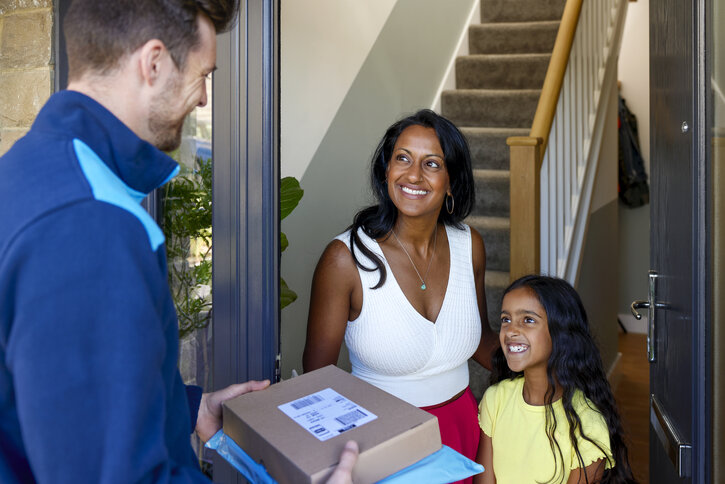
According to Geopost’s 2025 E-Commerce Trends e-shopper barometer, home remains the top delivery location of choice for consumers, despite the rising popularity of out-of-home (OOH) solutions.
However, despite home delivery being the mainstay of the logistics sector, challenges remain. A 2025 Sendcloud report, for example, found that 57% of UK shoppers encountered a delivery issue in 2025, nearly a quarter (23.6%) reported late deliveries, and 17.9% had parcels left in insecure locations.
The challenges affecting last-mile home delivery performance include balancing the need for cost efficiency against rising customer demands in a difficult labor market. “Other challenges include urban congestion, delivery address quality and unpredictable recipient presence,” says Nicolas Baise, COO of bpostgroup’s BeNe Last Mile.
Failed or delayed home deliveries also increase customer dissatisfaction and drive up delivery costs. “Consumers are quick to share poor experiences online or switch to competitors that offer a more reliable service,” notes Jason Fry, senior business development manager at RouteSmart. “For retailers and delivery firms, the margin for error is vanishingly small.”
The Sendcloud report revealed that many shoppers are unwilling to give retailers a second chance after a poor delivery experience. Similar research from Metapack, as part of its 2025 E-commerce Outlook, revealed that 76.6% of consumers would switch brands after a poor delivery experience. “This highlights that delivery performance is now central to building and maintaining customer trust and loyalty,” confirms Emma Clarke, senior director of product management at Metapack.
Delivery performance is interpreted in many ways by consumers, but one overriding demand from shoppers is convenience. “Ultimately, in an environment where convenience has overtaken cost as the leading driver of loyalty, delivery success is a key differentiator,” explains Clarke. “Companies that prioritize delivery accuracy and flexibility are better positioned to build long-term customer relationships and safeguard operational efficiency.”
This sentiment is echoed by Hervé Crochet, group head of sales at Geopost: “Shopper expectations are evolving rapidly. Today’s consumers, especially Gen Z, demand flexibility, transparency and control. They want to choose their delivery method, know who the carrier is and receive real-time updates. This shift is prompting us to personalize the last-mile experience and invest in technologies that support dynamic delivery options.”
Meanwhile, Bettermile’s 2025 Last Mile Delivery Experience Study revealed that consumer expectations are evolving from mere visibility to active control. “In an age of personalization, providers must offer a choice of options to meet these highly contextual and individual preferences,” says Simon Seeger, managing director at Bettermile. “The last mile must therefore adapt to effectively deliver flexibility and empower the customer.”
Customer control
Giving the customer control of the delivery experience is an approach embraced by delivery firms around the world. Thanks to highly advanced route optimization tools, in-flight delivery options, estimated time windows (ETAs), AI-based tracking and customer-facing apps, logistics operators are providing shoppers with increased transparency regarding their delivery, and greater flexibility to meet their changing needs.
Geopost has been leading the way in this area with its Predict service, which offers in-flight delivery options across Europe. “The myDPD app is also now available for consignees in 16 countries,” enthuses Crochet. “Already used by 35 million people, it introduces features that allow shoppers to specify their personal delivery preferences and improve delivery success at first attempt.”
Geopost uses route optimization tools, live and precise tracking, AI-powered technology (to prevent fraud) and behavioral analytics to anticipate customer needs and adapt delivery flows. “We have also progressively deployed AI-enhanced chatbots in 22 subsidiaries in Europe to improve customer care and respond more efficiently to consignees’ requests,” Crochet adds.

A similar approach has been adopted by UK parcel firm Evri, which in 2024-2025 invested £57m (US$75.8m) to enhance service quality and the customer experience. The company offers customers a full suite of notification options to suit their needs, including SMS and emails at various tracking points, as well as proactive updates should their deliveries encounter any delays.
“Alongside our website, customers can also access our Evri app to manage their deliveries, including setting their safe place preferences and accessibility instructions,” explains Elaine Turley, director of customer experience at Evri. “Our 30,000-strong courier network is also equipped with a delivery app, which uses in-built route optimization software to provide ideal routes for completing deliveries, as well as accurately calculating how quickly a given round can be completed based on the average delivery speed of couriers on similar rounds.”
Turley notes that Evri is currently the only UK parcel delivery company to mandate proof-of-delivery photos for every parcel. “We use AI-enabled parcel vision technology to review these images in real time, providing feedback to couriers if a parcel appears to be in an unsafe location,” she reports.
Informed deliveries
In the US, consumer expectations around convenience are challenging the United States Postal Service to rethink the definition of last mile. “The last mile used to end at the doorstep, but now it could end at a mailbox, a smart locker or an alternative delivery location, specified by the customer,” says Robert Dixon, senior director of delivery and retail modernization at USPS. “Because of this, we’ve had to enhance the visibility
we provide to our customers for their packages. We’re now providing more detailed tracking events and more communication channels. This increased visibility also enables us to better tackle porch piracy as customers know what mail is arriving and when.”
To help it provide more visibility, USPS has recently invested in new tracking technology that recalculates the expected delivery date and time of a package while it’s on its way to the customer. “At every step of a package’s journey, we recalculate the expected delivery date and time – and share it through all of our package tracking channels – to make sure that customers know exactly when their packages are going to arrive,” Dixon adds.
In October 2025, the postal service also launched its new Informed Delivery Mobile app – a free service that enables customers to digitally preview their incoming letter-size mail and manage package deliveries. The app’s features now include push notifications for updates to incoming mail and packages; optional biometric log-in for added security and ease of access; enhanced package-tracking capabilities; and the ability to view, interact with and manage incoming mail directly from a mobile device.
“The new app is intended to appeal to a digital-native consumer audience as well as new users who prefer mobile devices for communication needs,” Dixon continues.
Dynamic deliveries
Like USPS, international parcel delivery company GLS is moving away from static ETA windows into a more dynamic ecosystem, offering customers control, transparency and choice. The firm has teamed up with last-mile delivery software firm Bettermile to offer more flexibility in the last mile.
Johan Holstein, director of digital and last-mile transformation at the GLS Group, comments, “We’ve invested in the Bettermile suite, which enables last-minute redirection to OOH locations or delivery with the consignee’s drop-off permission. This technology allows us to better align with the changing schedules of recipients.
“Live, precise ETA updates are provided, which intelligently narrow as the driver progresses, offering real-time visibility similar to ridesharing and food-delivery services that many consumers use,” he continues. “These progress updates and delivery-time insights are key to building trust and engagement; while not all customers check regularly, those who do check tend to monitor their order status frequently, sometimes up to 10 times per delivery.”
According to Bettermile’s Seeger, within 30 days of deployment of the Better Tracking solution, GLS saw a 25% reduction in customer service calls, and drivers saved up to 45 minutes per day simply because customers anticipated and aligned around the delivery process.
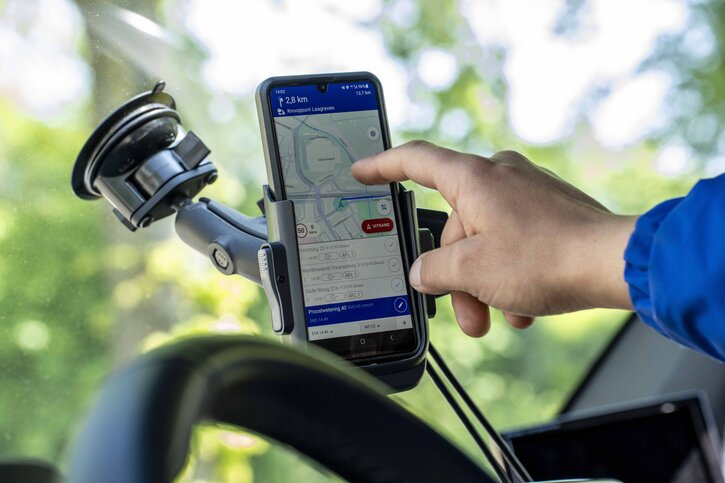
Seeger believes in-flight solutions such as Better Tracking have become a “powerful operational tool” in the delivery sector. He cites Bettermile’s 2025 Last Mile Delivery Experience Study, which revealed that 41% of respondents wanted to change their delivery on the day and would redirect their deliveries even in the last hour prior to arrival.
“Deploying in-flight redirects effectively requires what we call orchestrated tracking,” Seeger reports. “This is because accommodating last-minute changes demands a fully synchronized system. While implementing an orchestrated system requires change management, it is a strategic advancement that not only boosts satisfaction and productivity today but is essential for futureproofing the last mile.”
Seeger also believes that deliveries can be improved through increased data sharing between retailers and carriers: “By integrating data earlier, retailers can display a predictive ETA directly at checkout. This technology uses historical delivery data to provide a reliable two- to three-hour delivery window, days in advance. This early transparency gives customers the plannability they expect, and can increase shopping-basket conversion for retailers,” he explains.
Actionable insights
Data is at the heart of Metapack’s offering to the parcel and postal sector. The company’s delivery management platform enables retailers to see, analyze and act on delivery data in real time, turning potential problems into actionable insights, according to Clarke. “Through predictive analytics, we help retailers understand where and when disruptions are most likely to occur, enabling proactive action to protect delivery promises,” she says.
A key part of this intelligence comes from Metapack’s regionalized delivery analytics or ‘delivery hot spot’ data. “This solution allows customer service and operations teams to examine performance at postcode level, anticipate local disruptions and optimize carrier strategies,” Clarke continues. Already live in the UK, it will soon expand to the US and Europe.
Clarke also highlights a recent project with a major retailer struggling with doorstep theft and false denial of receipt claims, costing around £1m (US$1.3m) in disputed orders each week. “By analyzing order data, we implemented a layered shipping solution where high-risk orders were routed through secure services,” she explains. The outcome was impressive: during peak periods, the retailer saw a 90% reduction in disputed deliveries and savings exceeding £6m (US$7.9m).
Looking ahead, Clarke enthuses, “We’re launching a new AI-driven platform at The Delivery Conference 2026 [London, February 2-3] that will act on the 15 billion tracking events we process each year, detecting potential disruptions before they occur and preventing delivery failures entirely.”
Route optimization
RouteSmart is also working on providing more granular delivery data to its customers, according to Fry. “We use detailed street network data that captures real travel paths, turn restrictions and access rules – delivering a true-to-life model of the road network,” he comments. “This allows organizations to design routes that reflect real-world conditions, improving both reliability and performance.”
Fry adds that more precise route planning supports better customer communication: “Accurate ETAs and consistent updates mean parcels arrive when expected, reducing reattempts and improving first-time delivery success,” he explains.
He points to RouteSmart’s 25-year partnership with FedEx as a standout example: “When FedEx launched home delivery in 1999, its challenge was boosting first-attempt success in residential areas, where unpredictable volumes and inaccurate data caused delays. By powering the FedEx Route Optimization system with RouteSmart’s street-level intelligence, routes began to mirror actual drive paths and restrictions.”
The results were significant. “FedEx achieved over 10% efficiency gains, fewer reattempts and greater first-time delivery success,” Fry reports. “It proves that when you plan routes based on real-world data, you don’t just deliver parcels more efficiently, you deliver on customer expectations every time.”
Retailer partnerships
According to bpost’s Baise, alongside the latest route optimization and communication tools, close collaboration with retailers is essential to ensure successful last-mile deliveries. The post, which is supporting its home delivery network with an extensive OOH offering currently consisting of 4,000 points in Belgium, collaborates with retailers to offer accurate estimated delivery dates and enable delivery preference selection at checkout. “We also provide API-based tools to integrate tracking and in-flight changes into the retailer’s customer experience,” Baise adds.

Austrian Post, meanwhile, has recently expanded the delivery times for parcels, enabling retailers to drop off items “late into the night or early in the morning, with the items still delivered on the next working day after the order is placed,” explains Markus Leitgeb, a spokesperson at Austrian Post.
“We have also set up Sunday delivery in three Austrian cities – Vienna, Linz and Graz. This is a separate service where we deliver parcels on Sundays for an additional charge,” he continues. “Last year, we also rolled out 13,000 new handheld devices for our delivery staff, with software we developed ourselves. AI also plays a role here, for example in the estimated delivery time window, which we can now communicate even better to our customers.”
Future expectations
As customer expectations continue to evolve, the last mile is rapidly transforming from a fixed end point into a dynamic ecosystem. Data-driven intelligence, automation and AI-powered insights are enabling carriers and retailers alike to predict disruptions, enhance delivery precision and offer customers meaningful control over when and how they receive their orders.
“The future of last-mile delivery depends on carriers integrating both home delivery and OOH options into a dynamic, intelligent ecosystem, moving beyond a binary choice between delivery types. Collaboration and adaptive technology will be critical for delivering true customer flexibility and agency at scale,” GLS’s Holstein concludes.
This article was originally published in the December 2025 issue of Parcel and Postal Technology International.