


The Philippine Postal Corporation (PHLPost) has strengthened its efforts to combat illegal wildlife trafficking by partnering with the country’s Department of Information and Communications Technology (DICT), the Department of Environment and Natural Resources (DENR), and the Bureau of Customs (BOC).
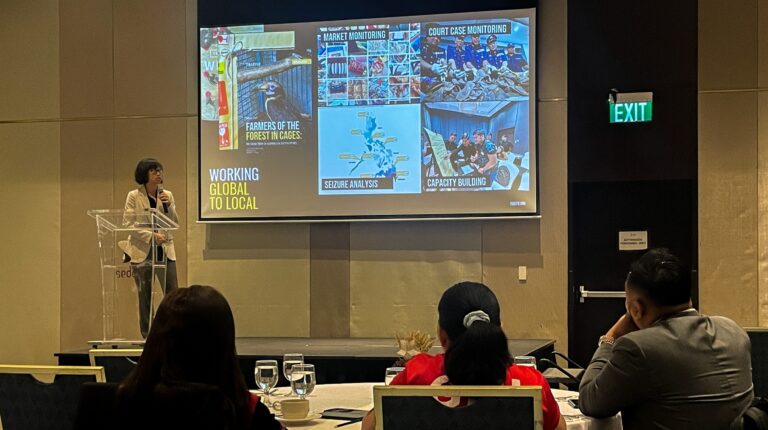
The agencies took part in a workshop facilitated by TRAFFIC Southeast Asia, together with 14 private express and/or messengerial delivery service (PEMEDES) operators, to develop the country’s first policy regulating the transportation of wildlife across last-mile delivery services.
During the session, Lorie Ann Hinacay, the acting chief of PHLPost’s Inspection and Investigation Division, outlined measures to enhance detection and prevention of illicit wildlife trade. She stressed the importance of mandatory screening, content verification and documentation checks, along with the need for stronger inter-agency coordination.
Hinacay also proposed establishing a real-time communication channel between PHLPost, BOC, DENR and law enforcement agencies to ensure rapid information sharing and response. “Putting a stop to wildlife trafficking is a tall order. It takes all of us working together to ensure the protection of wildlife,” she said.
As the country’s primary last-mile delivery provider, PHLPost said it remains committed to maintaining a secure and accountable national postal network, and to ensuring the responsible handling of mail, parcels and other deliverables across the Philippines.
In related news, Australia Post launches Counterfeit Detection Tool to tackle fake postage