


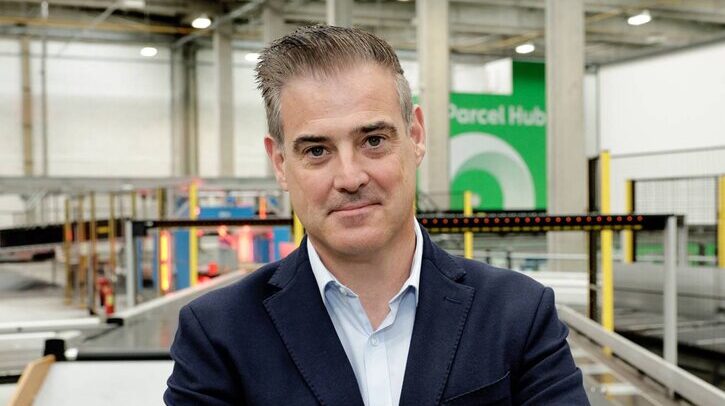
Garrett Bridgeman, managing director and COO at An Post, tells PPTI how technology investments and better services for SMEs are helping it become Ireland’s leading e-commerce delivery company
How are parcel volumes and online shopping habits evolving and how is An Post meeting those needs?
The rise of online shopping in Ireland is quite extraordinary and in the last 5-6 years we’ve seen our parcel volumes increase by about 300%. When Covid came around, parcel volumes went from 300,000 parcels a week to 600,000 parcels a week overnight, and what we’ve seen since then is there has been a steady march and the market is absolutely growing as whole. We’re now operating about 1.8 million parcels a week. We’ve put this growth down to a number of factors – Ireland is still a little behind Europe in terms of pieces per person online so there is a bit of catch up there; and secondly, the Irish economy is doing really well – we’re at full employment, there is a lot of disposable income and a younger market for online shopping.
For An Post, in our strategic plan we had estimated growth levels of around 10% per annum but the market is growing at a bigger rate than that. What does that mean for us? We’ve been working with our staff on the journey of e-commerce for the past nine years and the great thing about the postal industry is that the postmen and women are just amazing – they’re totally invested in the company and we’ve explained to staff over the past nine years that letter mail is going and will be gone, and if we were to just rely on mail there would be no future for An Post, so we’ve spent a lot of time working with staff to explain that parcels are our future. The staff have been amazing and that has allowed us to move them from sorting and delivering letters to sorting and delivering parcels. That is a big deal – they’ve moved from letter sorting machines to parcel sorting machines, from bicycles to vans, and as volumes grow, even bigger vans, and it is harder work. As an organization, the staff have been amazing and supported the ambition for us to be Ireland’s best e-commerce delivery company.
When I look at the forecasts, I see the growth is going to continue and I don’t see it plateauing any time soon. Talking to a lot of our international customers such as Amazon, Temu, Shein, Vinted and so on, they all have big growth projects and as more bricks and mortar move online, this trend will only continue. We’ve also seen huge growth in SMEs because the barriers for entry are evaporating – if you’ve got a decent product you could set up an online shop this afternoon. E-commerce is giving postal operators throughout the world a bright future that is only going to grow.
You’ve launched a new UK Direct service for SMEs, how does that work and what are the benefits?
If you look at Ireland and the UK, we’re quite culturally the same – our high streets are similar in terms of the brands that are there, we consume similar media and so on. Irish people love UK brands, so we’ve seen huge growth between the UK and Ireland for those brands. And particularly in rural Ireland where they might not have access to the big brands like M&S or Boots, they can go online and get items delivered next day. From a UK perspective, there are a lot of people who want to consume Irish brands and that was taking off just after Covid. Irish SMEs were doing very well and selling a lot into the UK, but when Brexit and the Customs Regulations 2020 came into force, that meant for UK consumers buying from Irish retailers all of a sudden the item was stopped by UK Customs who would either return the item, apply a charge or there were more delays on items being allowed into the UK. The market of 69 million UK customers started experiencing friction and it was costing them more. And this made it more difficult for customers who wanted to return items too – they couldn’t get the customs payments back and it became a real barrier. Since 2021, the UK has switched off from buying from Irish companies online and we’ve seen our volumes going into the UK halve.
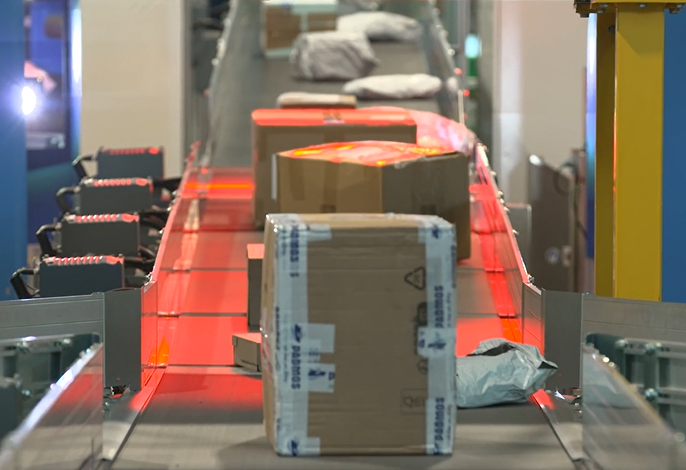
We’ve been doing lots of research and our Irish SMEs are wanting to get back into the UK market. If you buy from big brand such as Amazon, M&S or Boots into Ireland, it is seamless – all the customs stuff happens in the background. We’ve built that version for Irish SMEs so they sign up to An Post’s service, we plug them into our system and then the price that they quote on their website is the price that the consumer in the UK pays. We pre-clear the item in Ireland before it enters the UK and then through our collaboration we have with Royal Mail, they will deliver the item seamlessly with no duty paid or customs fees. And the best bit is, if the consumer wants to return the item, they can drop it to one of 24,000 Royal Mail drop-off points. We’re guaranteeing end-to-end three days with full tracking so the service really gives comfort to Irish SMEs that they can sell into the UK easily and equally, and UK customers have a seamless buying experience from Irish brands. We’ll be launching the service officially later in April, and then at the end of Q2 we’ll be launching a similar service for UK SMEs selling into Ireland.
What technology investments are you making to handle the volume increase in parcels?
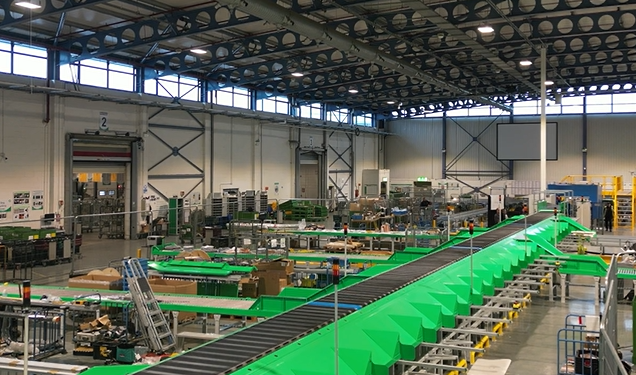
We have a huge footprint of letter sortation centers, so in the last 10 years we’ve repurposed our four main letter processing centers into parcel processing centers. It is the best investment you’ll make because you’re using the existing site, there is no time lag or planning permission and you’re redirecting your resources away from an old world into the new world. It also means there is less staff impact as you don’t have to relocate anyone.
We are also looking at 8-10% growth between now and 2030 and beyond, and our current infrastructure just won’t be able to cope with that level. We’re looking at a significant investment in a massive super center, similar to Royal Mail’s superhubs, where we would consolidate all of the processing operations for parcels under one roof, which will reduce our unit cost and unlock route sortation of parcels to enable more efficient last-mile delivery. We have the technology picked, the building design done but a project of such nature takes a number of years. The exact site is to be finalized, however, it will most likely be at a location in West Dublin, not too far from our current e-commerce campus.
Another investment we’ve made is we’ve moved a lot of our staff from bicycles to vans and we’ve doubled the size of our final-mile fleet – 53% of which is electric – and that gives us more capacity in the final mile.
We’ve also invested in technology and AI to allow us to do the sorting for us – in the past you would have to train staff to know where parcels for each location should go, but now you just point the glove scanner at a box, and it tells staff where to sort it.
What challenges are you facing when it comes to labor shortages and rising costs?
When it comes to labor challenges, in the postal industry the workforce is generally older than other industries and that can create challenges with sick absence, particularly because the work is more difficult as we move from letter to parcel delivery.
However, we’re not seeing challenges around attracting staff – because of the growth in parcel volumes we’ve been on an employment drive to hire 350 people in final-mile delivery, and we had over 4,000 applications which was amazing. I find that when I’m recruiting, when you talk to people about An Post they are enthusiastic and the company is perceived to have a real purpose and meaning – that is our DNA. Staff feel like they are a part of their community and it is more than just a job, it is part of who they are, and so we don’t have a problem with attracting people into the organization.
You mentioned your fleet is going electric, how else are you improving the sustainability of your operations?
We had an objective to have half of our last-mile fleet fully electric by the end of 2025, and we achieved that, and we have a net zero by 2030 target. To achieve that, on the last-mile fleet side of things we’re aiming to go fully electric and that will be challenging because you have certain parts of rural Ireland that struggle with electric infrastructure, so there may be some outliers that use hybrid vehicles – but that will be the exception rather than the rule. We have 99% of our middle-mile fleet using HVO and I think that will be the path we’ll continue on – we did experiment with electric trucks but the weight loads were too much and the vehicles couldn’t handle the range so we’re open to it but at this stage HVO is the best solution for us.
We’ve sustainability programs at all our sites, making sure they’re meeting net zero standards, and have tight management of our energy using solar power and so on, so sustainability is a core part of our business.
Are you expanding into the out-of-home market?
Lockers is a very hot topic at the moment, but what you find is that in Europe, especially Eastern Europe, lockers have always been culturally there in cities with high apartment density and some countries have legislations where deliveries are mandated to lockers. In Ireland, it is more like the UK in that lockers haven’t been a thing in the market until recently – there doesn’t seem to be huge demand for them but that is probably because they haven’t been installed extensively yet.
We’ve been working on our locker strategy for several years, trialled different things and we’ve installed a few of our own lockers, but they come with many challenges such as infrastructure needs, additional costs and software updates. We have 1,000 post offices nationwide and over 1,000 retail units (post points) that use our services, so our strategy is to use those facilities and extend the opening hours to ensure they work for customers, as well as looking at partnerships for expanding out-of-home services like lockers.
You’ve been in the industry for 29 years, what’s been your biggest achievement and what are you excited about for the future?
The postal industry say 10 or 15 years ago wasn’t a very positive place to be in – my job back then was to go round every site across the country and make redundancies and that is not a nice thing to do, especially as all our staff are so inspiring. However, the last 10 years have been extraordinary and what has given me the motivation is seeing those same people now so enthusiastic about the growth we’ve achieved and the amazing brands we’re working with. We’re at the cutting-edge of life now – online shopping and e-commerce is one of the fastest growing industries in the world with some of the leading brands working in it. We’re giving ourselves a future and giving our staff job security, which gives me the best energy.
The thing I’m most enthusiastic about is in our new world, having our upcoming national parcel center is going to be game changing for An Post – it is going to allow us to grow even more, become more efficient and help us offer better services for our customers. There is a very bright future for An Post in this new e-commerce world.
Related, An Post launches UK Direct parcel service for Irish SMEs shipping to the UK