


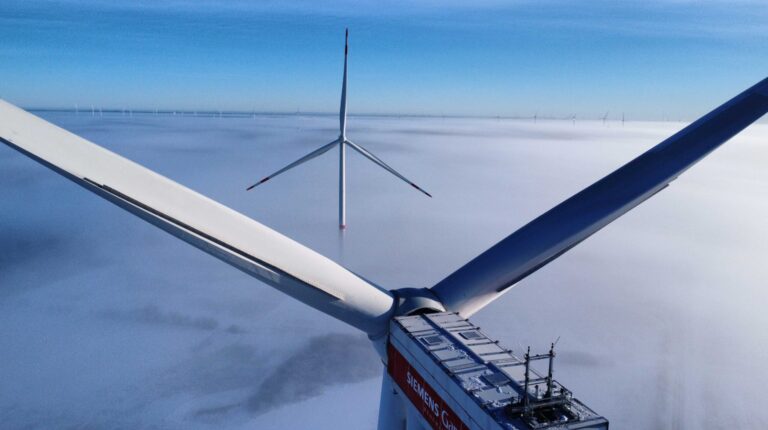
DHL Group and Statkraft have signed a 10-year power purchase agreement (PPA) for renewable electricity from an onshore wind farm in northern Germany, broadening DHL Group’s renewable energy portfolio beyond offshore wind.
Under the agreement, which began in February, Statkraft will supply around 35GWh of renewable electricity annually, covering roughly 8% of DHL Group’s current electricity demand in Germany. The electricity comes from the newly constructed Sollwitt-Pobüll onshore wind park in Schleswig-Holstein, which was commissioned in 2025 and has an installed capacity of 13.2MW.
The contract was signed with Deutsche Post, DHL Group’s German legal entity, and the electricity will supply Deutsche Post and DHL operations across Germany.
The agreement is DHL Group’s first long-term onshore wind PPA in Germany, and complements the group’s existing offshore wind PPAs. The company said sourcing power directly from a project outside Germany’s EEG subsidy scheme strengthens the resilience of its energy supply and supports the expansion of renewable capacity in the country.
“This agreement is an important milestone for our energy strategy in Germany,” said Anna Spinelli, chief procurement officer and head of mobility at DHL Group. “By adding our first onshore wind PPA, we are strengthening the resilience of our energy supply and directly supporting new, renewable capacity in Germany. Together with our offshore PPAs, this takes us another major step closer to decarbonizing our operations.”
“With its energy requirement, the logistics industry is a key player in the energy transition. We are delighted to have DHL, one of the world’s leading players in this industry, as our partner,” said Patrick Koch, head of German origination at Statkraft. “Our PPA model combines several advantages: long-term price security, access to renewable electricity from new wind turbines, and a tailor-made solution adapted to DHL Group’s specific preferences.”
In related news, DHL Group ramps up investment in new energy logistics as global demand for energy independence accelerates