


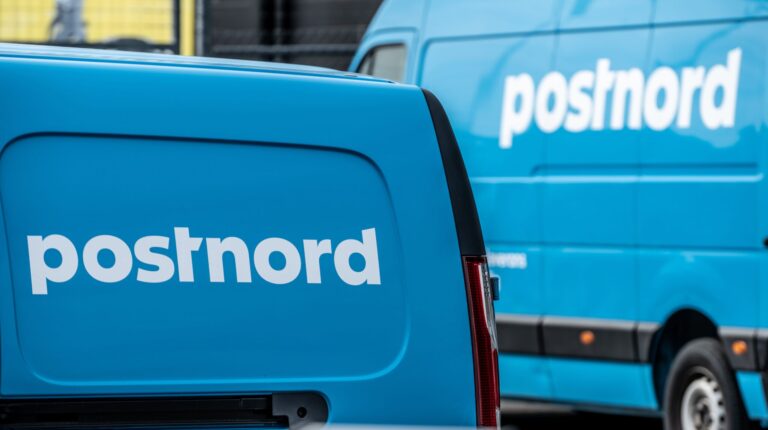
Swedish online pharmacy Apotea has expanded its partnership with PostNord to introduce emission-free outbound transportation from its logistics center in Morgongåva, Sweden, using electric trucks operating around the clock.
Under the new arrangement, PostNord now manages all outbound transportation from Apotea’s 38,000m² logistics hub outside Uppsala. New charging infrastructure has been installed at both the Morgongåva site and PostNord’s Veddesta terminal, allowing electric trucks to operate continuously and electrifying a larger share of the transportation chain.
“Our ambition has always been to make fast deliveries compatible with sustainability. Together with PostNord, we can now show that it’s possible and scale it up across Sweden,” said Yasmina Djedou, head of last mile and delivery experience at Apotea.
Apotea’s Morgongåva facility handles millions of deliveries annually and was designed with sustainability in mind. The site is certified for low energy use and features a large rooftop solar installation. Through the collaboration with PostNord, a growing proportion of shipments leaving the facility are now transported without tailpipe emissions.
Previously, Apotea used electric trucks for transportation between Morgongåva and Stockholm, while the mid-mile transportation between terminals relied on hydrotreated vegetable oil (HVO). With the updated setup, both the first and mid-mile legs are now handled by PostNord’s electric vehicle fleet, creating a fossil-free transportation chain from warehouse to terminal. Last-mile delivery operations remain unchanged and continue to be handled by PostNord and other delivery partners.
PostNord is also responsible for managing return flows back to the terminal and to Morgongåva. According to the companies, this supports a more circular logistics model by improving vehicle utilization, reducing total distance traveled and improving both cost efficiency and environmental performance.
Despite progress, Apotea says clearer communication around sustainability remains a challenge, particularly around terminology used to describe low-carbon transportation options.
“Customers want to make climate-smart choices, but the terminology can be confusing,” said Djedou. “Our goal is to make those choices simple and accessible. When the sustainable option becomes the easy one, that’s when real change happens.”
Looking ahead, Apotea is also testing small electric delivery robots for last-mile operations, transporting parcels from shared pickup points to customers’ homes.
“The last mile is often the most expensive and polluting part a delivery. There’s huge potential to collaborate and innovate,” Djedou said.
Apotea says the initiative demonstrates that high delivery performance and reduced environmental impact can be achieved simultaneously using existing electric transportation technology.
In related news, DHL Supply Chain to manage Waitrose’s newest distribution center